



Lodging eats up the largest chunk of any vacation budget. Many travelers assume they must pick between two extremes. You either book a depressing roadside motel. Or you empty your savings account on a luxury resort.
Fortunately, there is a third option that frequent travelers rely on every year. We call it the split-stay strategy. Instead of booking a single hotel for an entire week, you divide your trip into distinct chapters.
You spend your busy sightseeing days in an affordable basecamp hotel. Then, you finish your getaway in a higher-tier luxury property. In our testing across European cities, this method cut total lodging bills by 40% to 55%.
How the Split-Stay Method Works in Practice


The logic behind a split stay matches your natural daily vacation rhythm. During the first half of any trip, your itinerary is packed. You wake up early. You drink a quick espresso. You walk eight miles exploring museums, historic plazas, and landmarks. You only return to your room to shower and collapse into bed.
Paying $380 a night just to store your bags makes little financial sense. A clean, central apartment or modest boutique hotel costing $95 per night provides the exact same practical utility. You get a hot shower, fast Wi-Fi, and a safe mattress.
Once heavy sightseeing wraps up, your travel priorities shift. Physical fatigue sets in. You want to sleep late. You want to linger over breakfast, sip coffee on a private balcony, or soak in a deep tub. That is the exact moment to transition into your dream property.
By moving to a luxury property at the end, you appreciate every upscale perk. You actually use the spa, the robes, and the rooftop pool. You get maximum emotional value for every dollar spent.
The Golden 70/30 Booking Ratio


To balance savings with genuine comfort, we follow the 70/30 booking formula. If your trip lasts seven nights, spend five nights in your practical basecamp. Reserve your final two nights for an upscale splurge hotel.
Let us look at real numbers for a seven-night stay in Florence, Italy.
Option A is the full luxury approach. Seven nights at $340 per night costs $2,380 total. That puts severe strain on most travel budgets.
Option B is the strict budget route. Seven nights at $105 per night costs $735 total. It saves money, but leaves you feeling worn down by day six.
Option C is the split-stay approach. You book five nights at $105 per night ($525). Then you add two nights at $340 per night ($680). Your total cost is $1,205.
You save $1,175 compared to full luxury. Yet when you return home, your strongest memories will center on those final pampering days. Behavioral psychologists call this the peak-end rule. Human memory judges an experience primarily by how it felt at its peak and at its end.
Real-World Testing: Paris, Tokyo, and Rome
We tested this approach across three major global travel destinations to track actual savings and comfort levels.
In Paris, we spent four nights in a modest hotel in the 11th arrondissement. It was clean, quiet, and situated two minutes from a metro stop. We spent our days walking through the Marais and visiting the Louvre. On day five, we moved to an elegant boutique hotel overlooking the Seine. We saved over $850 compared to booking the boutique hotel for the full week.
In Tokyo, we used a compact business hotel near Shinjuku Station for our first five nights. The room was tiny, but transit connections were unbeatable. For the final two nights, we booked a traditional luxury ryokan with private hot spring baths in Hakone. The contrast felt magnificent.
In Rome, our basecamp was a family-run guesthouse near Termini Station. It cost $85 per night. For our weekend finale, we booked an historic palazzo near Piazza Navona. Moving took fifteen minutes in a local taxi.
What Usually Happens in Real Life

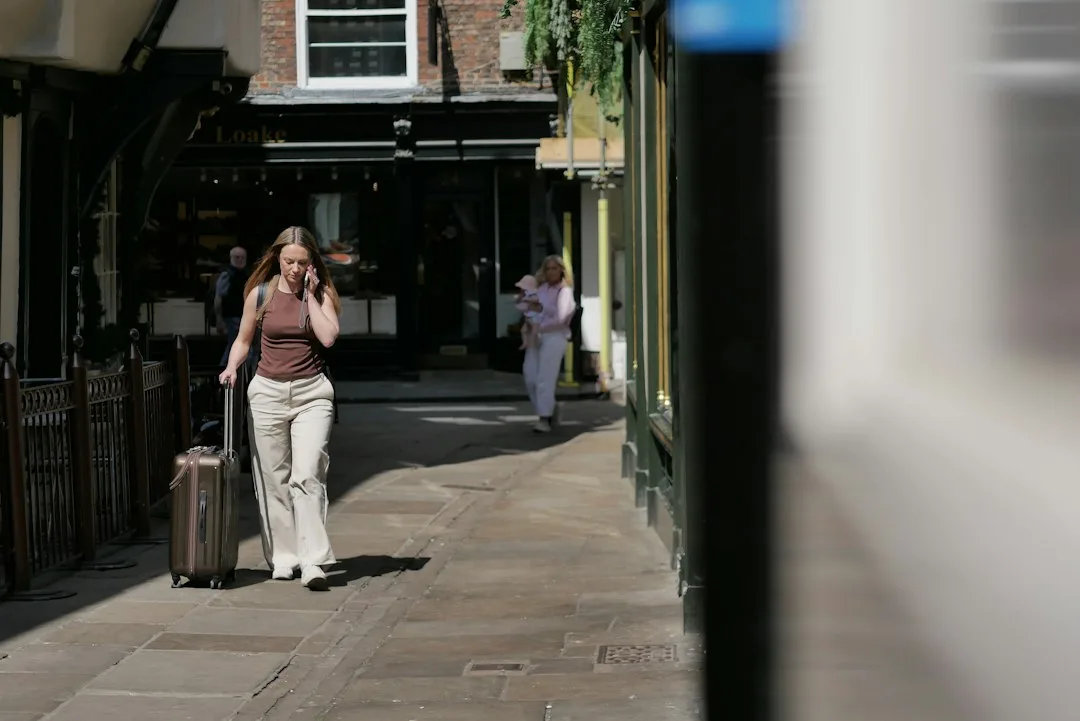
Travelers often plan ambitious itineraries without factoring in human exhaustion. By day four of walking ancient stone streets, enthusiasm drops. Small inconveniences like street noise begin to grate on your nerves.
When people stay in an expensive resort for their entire vacation, they often feel trapped. They feel guilty leaving the property because they paid so much for it. They sit by a pool when they actually wanted to see historical sights.
Conversely, staying in a basic hostel or dated rental for ten straight days produces travel burnout. We noticed that couples argue more frequently when their lodging provides zero sanctuary after tiring transit days.
The split stay resets your mental energy. Checking into a fresh, scented lobby midway through a trip feels like starting a brand-new vacation. It breaks the monotony of long journeys and gives you something exciting to anticipate.
What Most People Overlook

Most travelers overlook the hidden tax and transit savings of splitting locations. Many European cities charge tiered tourist taxes based directly on hotel star ratings. Staying five nights in a lower category cuts those mandatory municipal fees significantly.
In addition, moving accommodations allows you to explore two distinct neighborhoods. In London, spend three nights near transit-heavy King’s Cross to explore distant museums. Then move to Kensington or Covent Garden for relaxing evening strolls and theater.
You also gain access to two distinct hotel concierges. A local neighborhood host shares insider trattoria recommendations that luxury hotel desks rarely know. Later, your luxury concierge can secure difficult dinner reservations or private airport transfers.
Finally, packing becomes simpler. You only unpack essential clothes during your basecamp days. Your suitcase stays organized, making checkout effortless.
Common Mistakes Beginners Make
.

- Moving hotels on heavy transit days: Never switch hotels on travel days with intercity trains. Keep moving days simple and stress-free.
- Booking properties too far apart: Keep your two hotels within a 15-minute taxi ride or direct subway line. Dragging bags across a sprawling metropolis ruins the fun.
- Failing to coordinate check-in times: Typical check-out is 11:00 AM, while check-in starts at 3:00 PM. Always confirm that your second hotel will store bags during that window.
- Reversing the stay order: Never put the luxury stay first and the budget room last. Downgrading mid-trip feels disappointing and casts a shadow over your final days.
- Overpacking heavy luggage: The split-stay strategy demands reasonable baggage. If you travel with multiple giant suitcases, moving properties becomes an annoying physical chore.
- Forgetting to notify front desks: Always tell the first property your checkout time. Notify the second property of your early luggage drop-off.
Frequently Asked Questions
What do I do with my luggage between hotel check-out and check-in?
Nearly all hotels and reputable guesthouses hold bags for arriving guests without extra fees. Check out of property one at 10:30 AM. Take a taxi directly to property two and hand your bags to the front desk. Head out for lunch unburdened, and return after 3:00 PM when your room key is ready.
Is moving hotels disruptive to a relaxing vacation?
Not if you plan it properly. We recommend unpacking only your toiletry kit and immediate clothing cubes during the basecamp phase. Moving takes under thirty minutes when your suitcase stays organized.
Can I use this strategy with vacation rentals like Airbnb?
Yes, but beware of fixed cleaning fees. Vacation rentals charge fixed cleaning fees per reservation. That fee inflates short two-night stays significantly. For split stays, traditional hotels or serviced aparthotels with included daily housekeeping usually deliver better value.
How do I pick the right basecamp neighborhood?
Choose an area with direct subway or train connections. Focus on walkability, grocery stores, and local cafes. Avoid heavy nightlife zones if you value quiet sleep before early sightseeing mornings.